Free roof inspections · Written estimates
(214) 919-3726Silicone vs. Acrylic Roof Coating for Carrollton Commercial Roofs
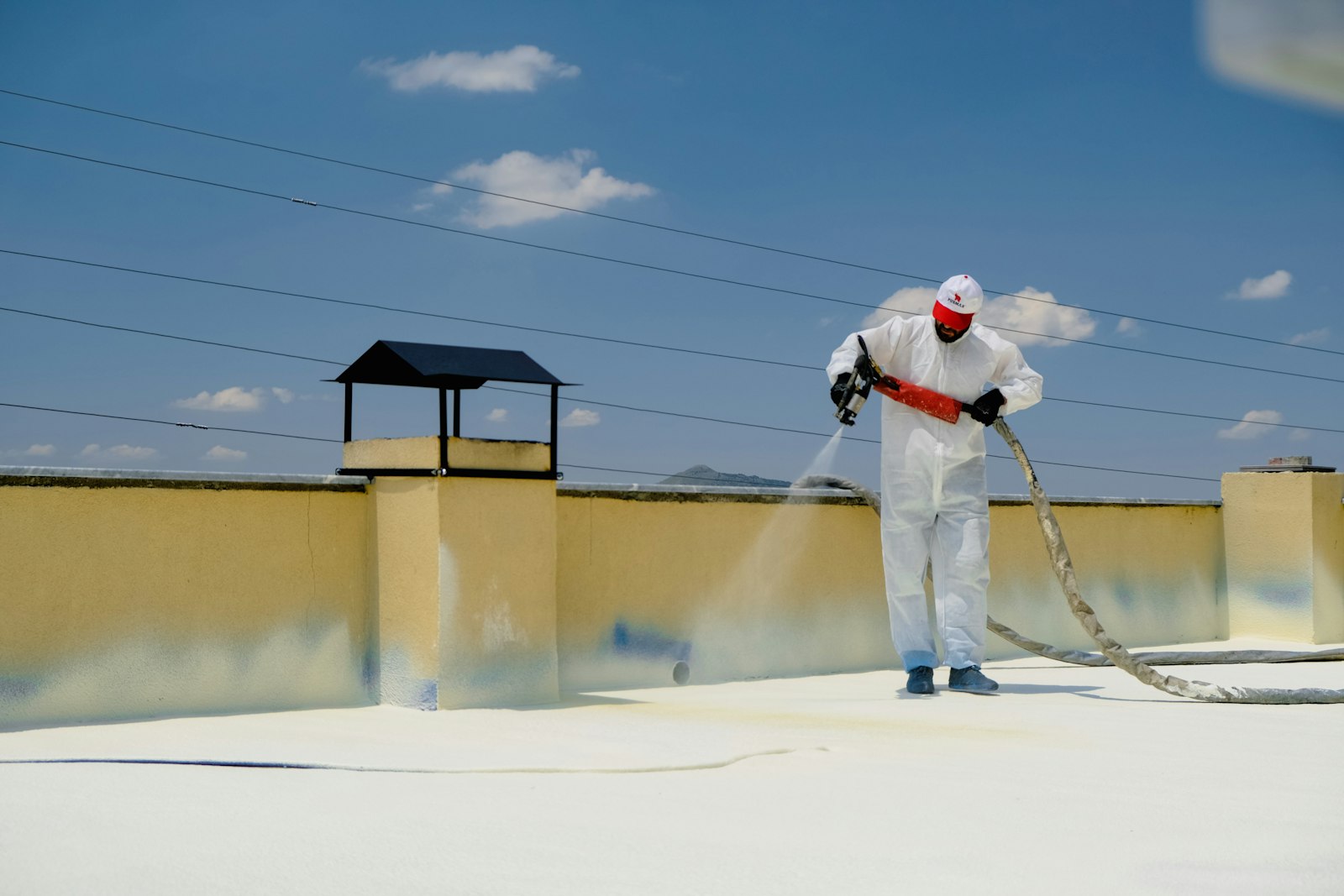
A low-slope roof that has stopped leaking reliably but still has a dry deck and sound insulation does not always need to come off. On many Carrollton warehouses, flex buildings and strip centers, the real choice is whether to restore the existing membrane with a fluid-applied coating, and if so, which chemistry to use. The silicone vs acrylic roof coating decision looks like a product preference, yet it mostly comes down to how water behaves on your roof, when the work can be scheduled, and what you want to be able to put on top of it in ten years.
A Restoration Coating Is a New Waterproofing Layer Over the Old Roof
A roof restoration coating is a liquid-applied elastomeric membrane rolled or sprayed over an existing roof, where it cures into a seamless, reflective skin. It is not paint. Applied at the thickness the manufacturer specifies, it becomes the first line of defense against UV and rain, while the old membrane underneath stays in place as the base.
The range of roofs that can take one is wide. The Roof Coatings Manufacturers Association FAQ states that almost all roof types can be coated, including metal, spray polyurethane foam, single-ply, modified bitumen and built-up roofs, but that ballasted and gravel-surfaced membranes are not typically acceptable without special treatment. RCMA also reports that, based on long-term histories, a properly applied coating can extend a roof's life up to 10 years or more, with performance depending on the coating type, conditions and film thickness.
That extension only holds when the roof underneath deserves it. A coating seals the surface; it does nothing for saturated insulation, a deteriorated deck or seams that have already let go.
Acrylic Coatings Are Water-Based and Built for Surfaces That Drain
An acrylic roof coating is a water-dispersed elastomeric coating that cures as its water evaporates. The governing product standard, ASTM D6083, the specification for liquid-applied acrylic coating used in roofing, describes it as an acrylic latex elastomeric emulsion and tests the cured film for elongation, tensile strength, permeance, water swelling, adhesion, fungi resistance and low-temperature flexibility, including after accelerated weathering.
Because acrylics depend on evaporation, weather governs the job. CertainTeed's comparison of the two chemistries puts the usual acrylic application window at about 50 degrees F and rising, notes that freezing before cure can permanently damage the film, and says cure slows in humid conditions. Over the years an acrylic surface also erodes slightly under sun and rain, a process called sloughing, which has a side benefit: the roof tends to look cleaner longer.
Acrylics take tinting well, so they suit projects where color matters, and they adhere strongly to properly prepared substrates. Their natural home is a roof with positive drainage, such as a sloped metal roof on a shop building or a low-slope roof whose drains actually empty it.
Silicone Coatings Are High-Solids and Tolerate Standing Water
A silicone roof coating is an inorganic, highly UV-stable elastomer that resists water far better than acrylic. ASTM keeps a separate specification for it, D6694, written around silicone used as the top coat on spray polyurethane foam roofing, which is one reason silicone is so common over foam.
The CertainTeed comparison of acrylics vs silicone says silicone performs better in ponding conditions, can typically be applied from about 35 degrees F and rising, and actually cures faster when humidity is high. It is roughly 95 percent solids, so it often reaches the specified dry film thickness in fewer passes, which can offset its higher material price on a large, flat roof. The trade-off the same source names is dirt: silicone tends to attract surface dirt over time, which pulls down its reflectivity unless the roof is cleaned.
Think about the next coat before you choose this one. The product applied now limits what can bond to it later, and RCMA's guidance is simply to follow the manufacturer's recoating requirements. Get them in writing.
How Silicone and Acrylic Compare on a Low-Slope Roof
The comparison below draws on the manufacturer guidance and standards cited in this post. Treat it as a starting point; individual products vary, and the data sheet for the specific coating you are quoted should settle any close call.
| Factor | Acrylic | Silicone |
|---|---|---|
| Chemistry | Water-based acrylic latex elastomer | Inorganic, roughly 95 percent solids |
| Standing water | Prone to break down where water ponds | Performs better in ponding conditions |
| Typical application temperature | About 50 F and rising | About 35 F and rising |
| Cure in humid weather | Slows as evaporation stalls | Speeds up |
| Appearance over time | Slight surface erosion keeps it cleaner | Tends to collect surface dirt |
| Material vs labor | Lower material cost, may need more coats | Higher material cost, fewer passes |
| Best-fit roof | Well-drained or sloped surfaces, including metal | Flat roofs and ponding-prone areas |
Read the table as conditions, not a scoreboard: an acrylic that goes onto a well-drained metal roof in mild weather can perform for years, and a silicone laid over a roof with wet insulation will fail no matter how well it handles standing water.
Ponding Water Narrows the Choice but Does Not Settle It
Ponding is the single factor that most often pushes a flat roof toward silicone, because water that sits for days works on an acrylic film in a way it does not on silicone. RCMA's FAQ makes the same point more cautiously: some coatings tolerate ponding water, but not all, so the manufacturer's position on the specific product matters.
Tolerating a pond is not the same as fixing one. Standing water still adds weight, still collects debris and still marks a low spot in the deck or a drain that cannot keep up. If your roof holds water after storms, our guide to ponding water on a flat roof covers the causes and corrections; those are best handled before any coating goes down, not hidden under it.
Restoration or Replacement Comes Down to What Is Under the Membrane
A roof is a restoration candidate when the deck is sound, the insulation is dry and the existing membrane is aged but still attached and serviceable. It is a replacement candidate when moisture has spread through the assembly or the deck has deteriorated. RCMA strongly recommends bringing in a roofing contractor when existing leaks, wet insulation, a damaged deck or manufacturers' warranties are involved, and those are exactly the conditions a survey is meant to uncover.
In practice that survey means walking the roof, probing seams and flashings, and checking for trapped moisture, often with a moisture scan confirmed by a few small core cuts. Active leaks have to be repaired before coating, and the surface has to be cleaned and dried thoroughly; RCMA notes that a primer does not replace that cleaning.
The money works differently too. The Department of Energy's Guide to Cool Roofs observes that replacing a sound roof only to raise its solar reflectance is rarely economical, which is part of why coating an existing roof is the usual route to a cooler surface. On the accounting side, RCMA says coatings are often classed as maintenance rather than a capital roof replacement, but it advises checking that treatment with your CFO or tax adviser rather than assuming it.
Carrollton Conditions That Tilt the Decision
Carrollton's commercial stock leans heavily toward tilt-wall warehouses and light-industrial buildings, the kind clustered around Trinity Mills Road, Wainwright Way and Valwood Parkway. These buildings tend to have large, nearly flat roofs where a few low spots can hold water across a wide area, and that shifts many of them toward silicone or toward drainage corrections first.
Scheduling matters here as well. North Texas winters bring cold snaps and the occasional hard freeze, and RCMA notes that water-borne coatings generally need air at 50 degrees F and rising with no rain for 24 hours, which can squeeze an acrylic project into the shoulder seasons. Humid summer nights, by contrast, slow acrylic cure but help silicone along.
Heat is the reason many owners look at coatings at all. DOE's guide says a cool roof can cut a single-story building's annual air-conditioning energy use by up to 15 percent in warm or hot climates, and that savings should be estimated using aged reflectance values. On a long, low warehouse, that aged number is where silicone's dirt pickup and acrylic's slow erosion start to matter. Spring hail is the other local factor: RCMA recommends inspecting a coated roof semi-annually and after major storms, and a roof that has just been coated still deserves a close look after a hailstorm.
Letting Drainage and the Calendar Pick the Chemistry
Start with the roof, not the bucket. If a survey finds wet insulation or a failing deck, neither coating is the answer and the conversation shifts to replacement. If the roof is dry and sound, look at how it drains: a surface that sheds water within a day or two gives you a genuine choice, while a roof that holds water points to silicone and to fixing the drainage first. Then check the calendar against each product's application window, and ask how the coating can be recoated later, because that decides the roof's next fifteen years as much as its next five.
For owners who would like that survey done on their own building, the commercial roofing team at Carrollton Texas Roofing can document the roof's condition and lay out restoration and replacement side by side.
Sources
Acrylics vs. Silicone (CertainTeed)
Frequently Asked Questions (Roof Coatings Manufacturers Association)
Guide to Cool Roofs, DOE/EE-0384 (U.S. Department of Energy)
Weighing a coating against a tear-off on your building? Start with a moisture check of the roof you already have.
Find Out Whether Your Roof Can Be Restored
Before anyone quotes silicone, acrylic or a new membrane, the roof underneath has to be checked for trapped moisture, loose seams and drainage faults. You get photographs and written findings, with restoration and replacement priced separately so the comparison is clear.

Carrollton Texas Roofing
Roofing contractor serving Carrollton and the surrounding Denton County communities. Replacement, repair, hail damage and commercial low-slope work, handled by insured local crews. Every inspection ends with photographs and a written assessment you keep.
(214) 919-3726Services
Service Areas
Quick Links
© 2026 Carrollton Texas Roofing. All rights reserved.